Gregory Cooper and Martin Watts, The University of Sheffield
Where has time flown?! With our workstream 1 data collection in Bihar wrapped up and our first Didi Haat up and running in Nalanda district, the activities of the INFUSION project are increasingly focusing on the state of Odisha. Running alongside the Randomised Controlled Trial being led by our colleagues at the London School of Hygiene and Tropical Medicine (LSHTM), the team at The University of Sheffield is currently studying the functioning of, and the challenges faced by, rural food markets in the district of Keonjhar, Odisha – located ~175 km north of the state capital Bhubaneswar.
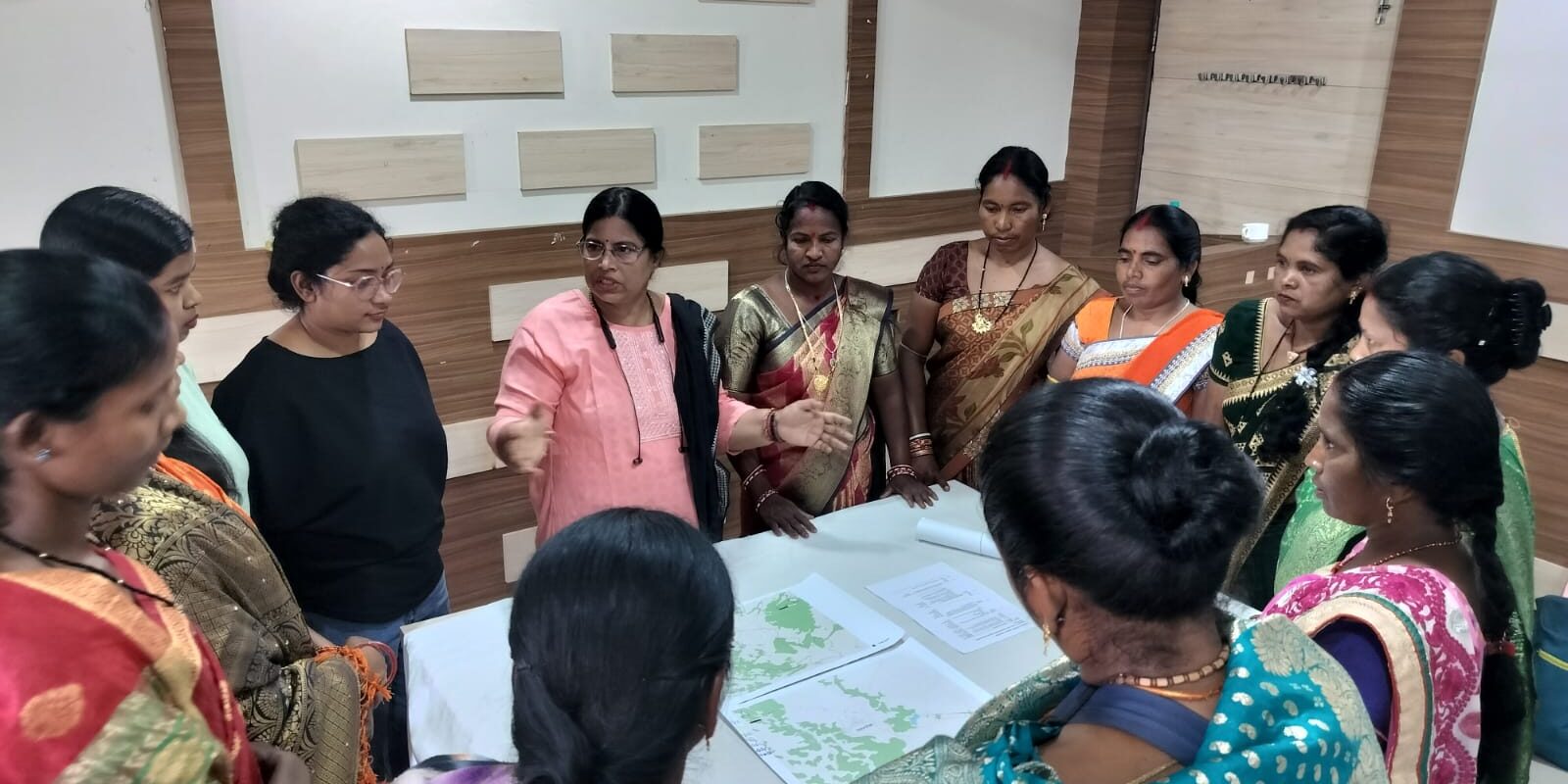
As part of this workstream, we are conducting a campaign of Spatial Group Model Building (SGMB)1, which brings together a small number of local stakeholders in a focus group setting to co-design and develop a visual model of the research problem and system under study. For Greg, and professors Bhavani Shankar and Suneetha Kadiyala, this method brings back nostalgic memories of the Market Intervention for Nutritional Improvement (MINI) project, where, alongside Dr Karl Rich (one of, if not the guru of SGMB), SGMB was employed to understand the successes and trade-offs of Digital Green’s Loop aggregation scheme through the eyes of participating farmers.
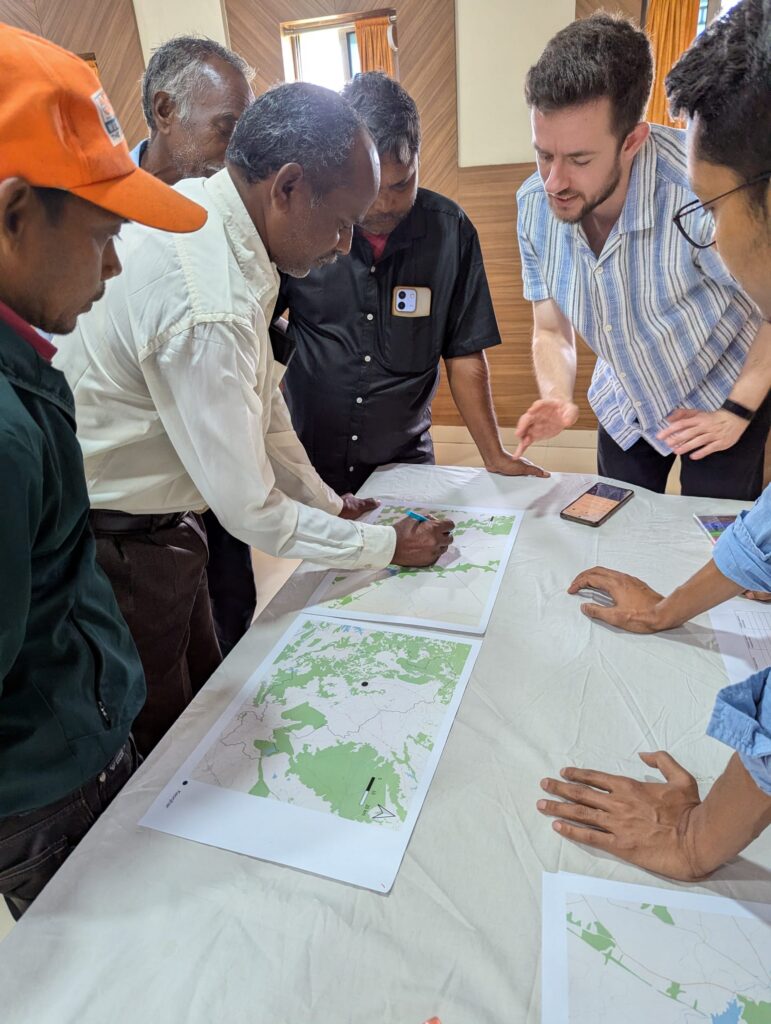
In Keonjhar, we are using SGMB to understand how local supply chain actors view the ‘resilience’ (i.e., the ability of supply and market systems to continue working under stress and to be able to quickly recover) of rural food markets to short-term extreme weather events (e.g., intense or persistent rainfall, cyclones, heatwaves etc.,) and longer-term climatic changes (e.g., multidecadal changes in rainfall
variability). In particular, we are interested in understanding the processes and feedback loops within and between supply chains and markets for nutrient-dense foods. In other words, exploring how producers, traders, vendors, and consumers interact with each other, and how these interactions shape how they prepare for, respond to, and recover from climate-related disruptions.
SGMB typically involves four to five sessions with the same group of participants, spaced over a month, to provide ample time to work with local system actors to iteratively develop these system models, which demonstrate the feedback loops, the key ‘stocks’ in the system, e.g., availability of nutrient-dense foods in local markets, and the key variables and drivers which influence their inflows and outflows.
Supported by our colleagues at DAI Research & Advisory Services, the first sessions for each of our two groups (split by gender) were conducted last week. The first session focused on orientating the participants to the task at hand, the introduction of ‘systems thinking’ language (e.g., stocks, flows and feedback loops), and the mapping of key market and transportation infrastructures across the study district.
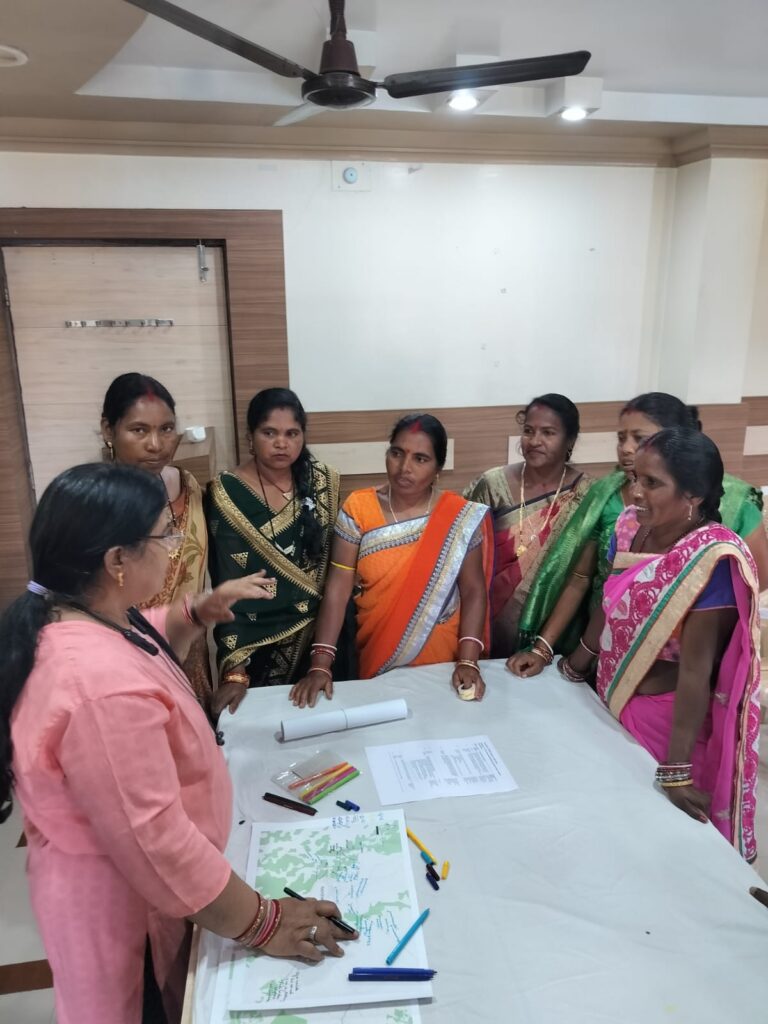
During the first session alone, stakeholders from across the supply chain emphasised how persistent and untimely rainfall can create cascading problems throughout the system. From the damage of harvest-ready crops, to the spoilage of harvested crops en route to market and the flooding of roads and markets themselves (which discourages both sellers and buyers from attending the market),
a single and relatively self-contained climate event can significantly reduce the affordability and quality of fresh produce available. A key task for our remaining sessions is therefore to unpack the processes and feedback loops influencing the climate-vulnerability of these markets, followed by the ways in which the adaptive capacities of participants strengthen or undermine market resilience before, during or after an event. A focal part of this will be identifying so-called ‘leverage points’, such as infrastructure and/or regulations, that would enhance market actors’ abilities to withstand and recover from climate-related disruptions.
With three SGMB sessions to go and lots of work remaining, we plan to briefly write-up our main reflections here following each session. Please do watch this space for further updates, and feel free to reach out to Greg or Martin for further information on the SGMB methodology or the INFUSION project more generally.
- For a more detailed description of the SGMB method, including case studies from
India and Myanmar, please see this article by Rich et al. 2021 published open
access in the journal Development in Practice. ↩︎