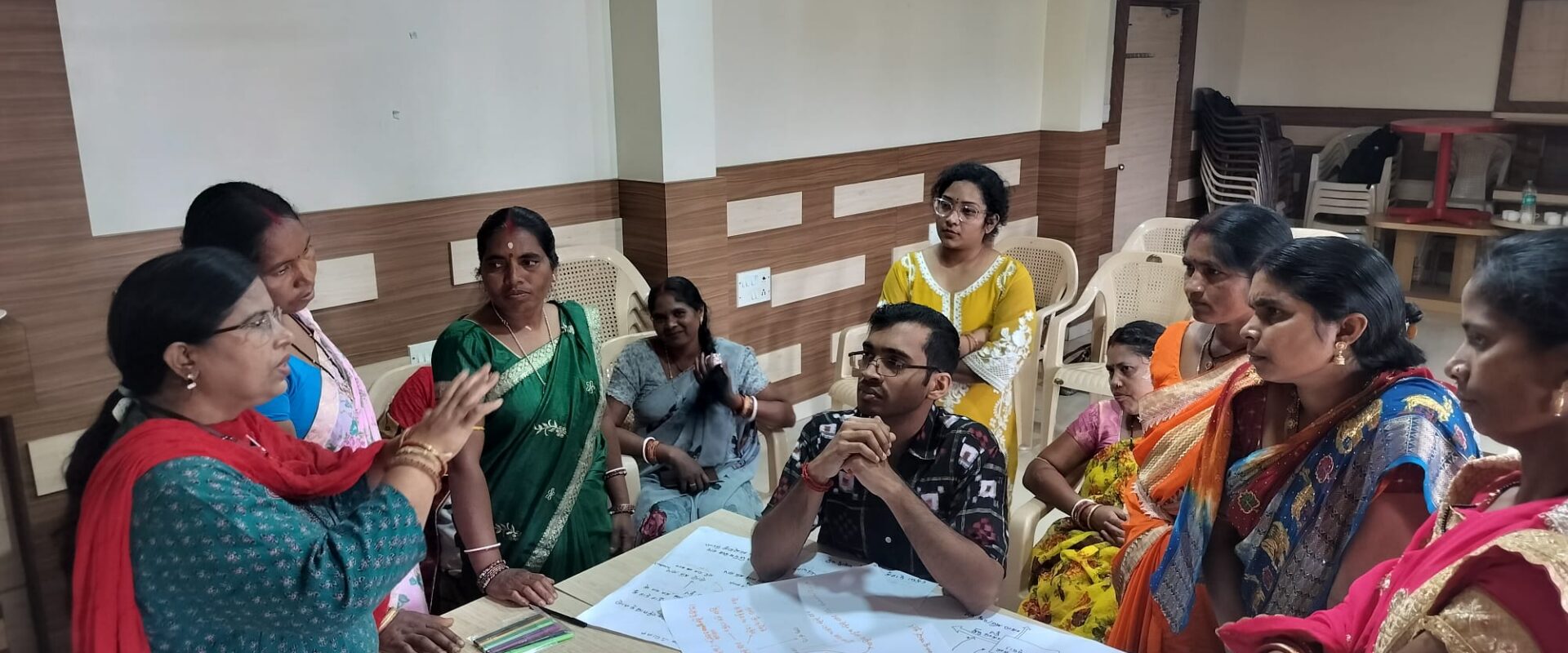
Gregory Cooper (The University of Sheffield) and Shreyansh Dwivedy (DAI Research & Advisory Services)
Hello from the 7.20am Brahmapur to Tatanagar Vande Bharat express as Shreyansh and I travel to Keonjhar to conduct our third of four Spatial Group Model Building (SGMB) sessions. Unfortunately, Martin’s wait to travel on an Indian train continues after returning to the UK last week (ek din ho jayga, bhai!) – meaning it’s me and the crack squad from DAI Research & Advisory Services rounding out the campaign over the next couple of weeks.
As introduced here, we are conducting a series of SGMB sessions to understand the perceived climate resilience of rural fruit and vegetable supply chains in the Keonjhar district of Odisha. Working with local producers, wholesalers, retailers and consumers, we aim to co-produce a causal-loop diagram describing the ways in which different stakeholders prepare, adapt and recover from extreme climatic
events (e.g., unseasonal and persistent rainfall, extreme heat, tropical cyclones), including the ways in which existing physical infrastructure is utilised (or not!), the ways in which different actors interact (e.g., synergistically or antagonistically), as well as the ways in which different determinants and outcomes of resilience differ by gender (i.e., the classic ‘resilience for whom?’ question).
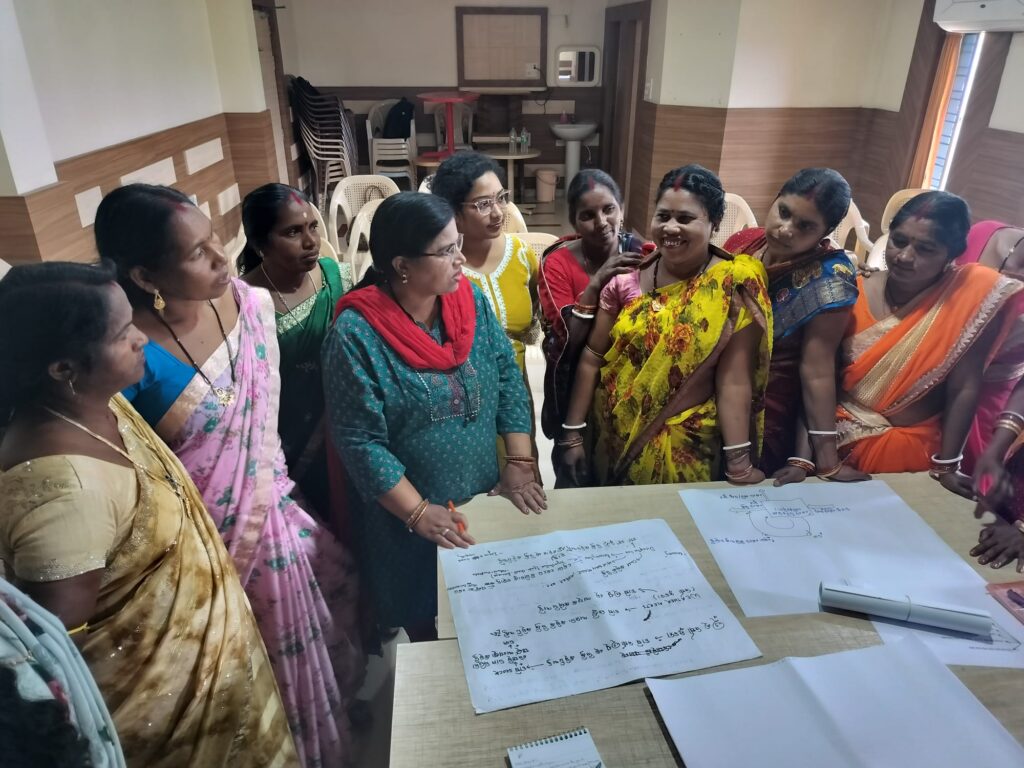
Following on from the first session where we finished up by shortlisting the most damaging climate events (persistent heavy rainfall leading to the flooding of roads and marketplaces was agreed to be a particular menace), the second session focused on developing causal-loop diagrams of market dynamics under such extreme conditions. SGMB provides an approach to visualise how the decisions and actions of participants in one part of the supply chain (e.g., producers) connects to and influences the decisions of others elsewhere in the system (e.g., consumers). To give a small illustration, both producers and consumers described at length how the impact of extreme weather actually starts before the first drop of rain, when the extreme weather alerts issued by the government typically prompt the early harvest and sale of fruits and vegetables. While this dynamic typically leads to a glut of
produce in the market and a subsequent fall in prices, it is the wholesalers who leverage their networks and capacities to aggregate produce and inflate their roles as price setters.
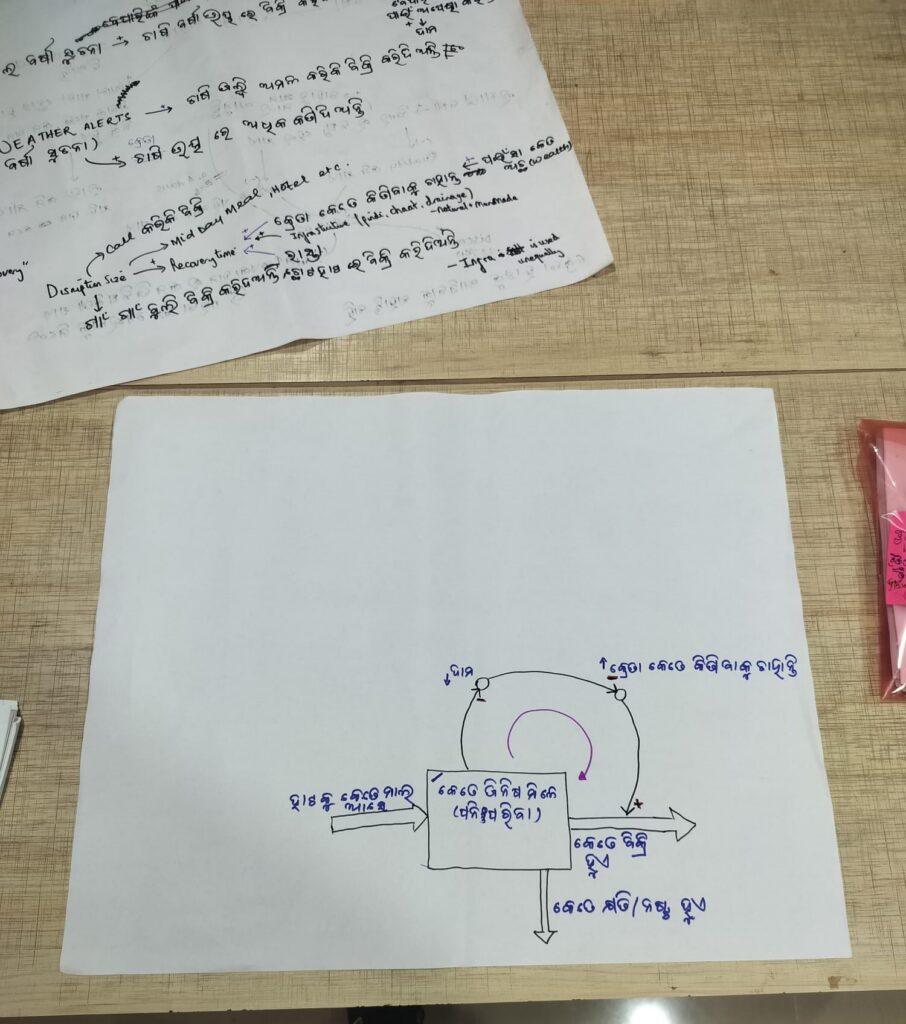
Whilst the initial reaction of the research team was to assume that this dynamic unanimously erodes market resilience (“surely everyone other than wholesalers lose out?!”), it became clear from the discussions how wholesalers can actually help to build robustness in market functions by simultaneously offering convenience to both producers (looking for a quick, guaranteed sale, albeit at a lower profit margin) and consumers rushing to purchase food before any disruption.
In turn, producers described how they often face a dilemma between (a) wanting to visit smaller, more local markets which can be reached on foot (particularly beneficial to women who do not always have access to private transport), and (b) relatively larger yet distant markets where wholesalers typically congregate. As we are learning from these sessions – timing is everything – and not reaching the market before the rain starts can have significant impacts on personal comfort, the number of buyers available to sellers, and ultimately the price of nutrient-dense foods available to purchase in the market.
As we continue to co-design these models, the third sessions will focus on (i) how supply chain actors utilise existing market infrastructures to guard against extreme weather (e.g., raised platforms, overhead coverings, any storage facilities etc.,), (ii) co-developing a list of potential facilities that may benefit market resilience, and (iii) tracing the potential costs and benefits (trade-offs!) of these interventions through the system structure to identify potential unintended consequences. The sessions so far have been a lot of fun, with both groups bringing plenty of experience, energy and insights! Here’s to the next two!
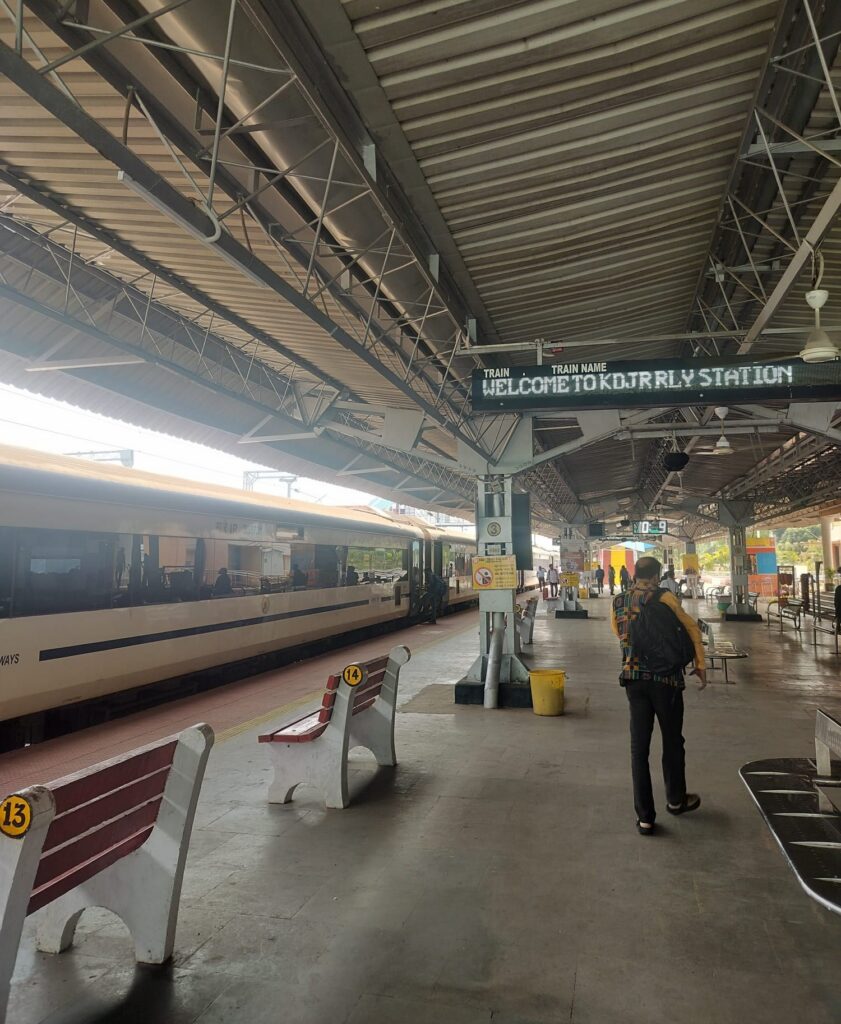
Anyway, we shall leave things here with the train now pulling into Keonjhar station; time to go find an auto to ferry us to the hotel! Thank you for reading and please do look out for the next instalment as we continue to develop the models further through the third and fourth sessions!
P.S. for anybody seeking some extra reading, this recent paper by Emma Stephens and colleagues provides a detailed overview of participatory systems modelling approaches and their recent application in the agri-food systems space.