Reflections from the field on diet diversity, processed food, and the inconvenient truth hiding in plain sight
Aakriti Gupta, Research Fellow,
London School of Hygiene & Tropical Medicine
There is a particular kind of disappointment familiar to nutrition researchers. It does not appear in laboratories or seminar rooms, but somewhere between a village marketplace and a spreadsheet late at night, when the rich diversity documented in the field collapses into a single, stubborn data point: fried potatoes and biscuits.
Understanding What People Actually Eat
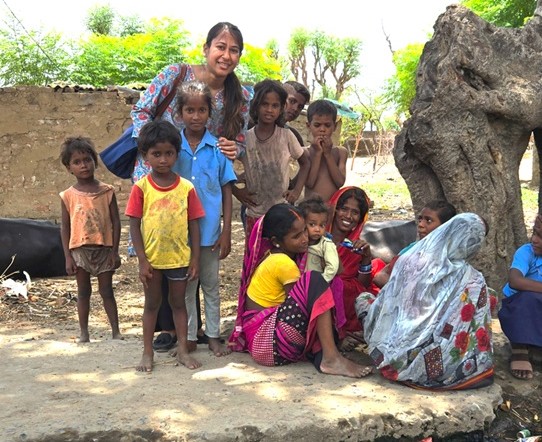
Our work began in the sultry summer months last year in rural Bihar. We were working on INFUSION, a research project built on a simple premise: that rural food markets play a critical role in shaping rural nutrition. If we can understand how food moves through these markets, and how households access and consume it, we can identify ways to make nutrient-dense foods such as fruits, vegetables, and animal-sourced foods more available and affordable. But before improving diets, we first needed to understand them accurately.
We conducted detailed 24-hour dietary recalls for mothers, children, men, and other household members before the survey. We also carried out free-listing exercises to capture foods consumed across seasons, recognising that diets change substantially throughout the year. To understand the local food environment, we surveyed weekly markets and documented every food item available for purchase. In some cases, this meant walking through markets with a weighing scale to measure portion sizes of both packaged snacks and loose items sold at stalls. I remember balancing my notepad and the scale while a vendor looked at me like I had personally lost my mind. By the end of the exercise, we had documented more than 300 ingredients and over 450 dishes and recipes in Bihar alone.
Expanding the Study in Odisha
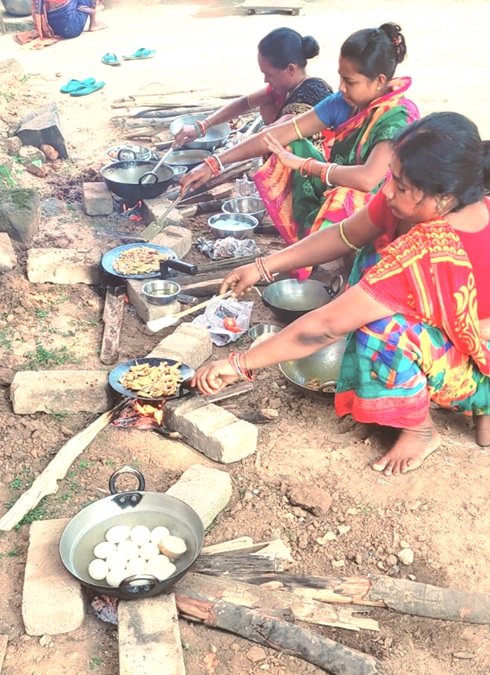
When the project expanded to Odisha, we refined our approach further. In addition to
identifying foods consumed by households and sold in markets, we collected multiple
versions of recipes for commonly consumed dishes and documented foods before and after
preparation. We also used food models to estimate portion sizes more accurately during
interviews. Water was used for liquids, wheat flour for dense solid foods typically served on
plates, peanuts for airy foods like chips that contain spaces between particles, and playdough
for foods that came in irregular shapes.
The diversity we encountered was striking. Across households and markets in Odisha, our
database grew to approximately 470 ingredients and nearly 670 dishes and recipes. Odia
cuisine, in particular, revealed remarkable culinary richness, featuring seasonal ingredients,
fermented preparations, wild greens, freshwater fish, and a wide variety of rice-based dishes.
At this stage, the evidence appeared to confirm what many already believe: that rural Indian
diets are extraordinarily diverse.
When the Data Told a Different Story
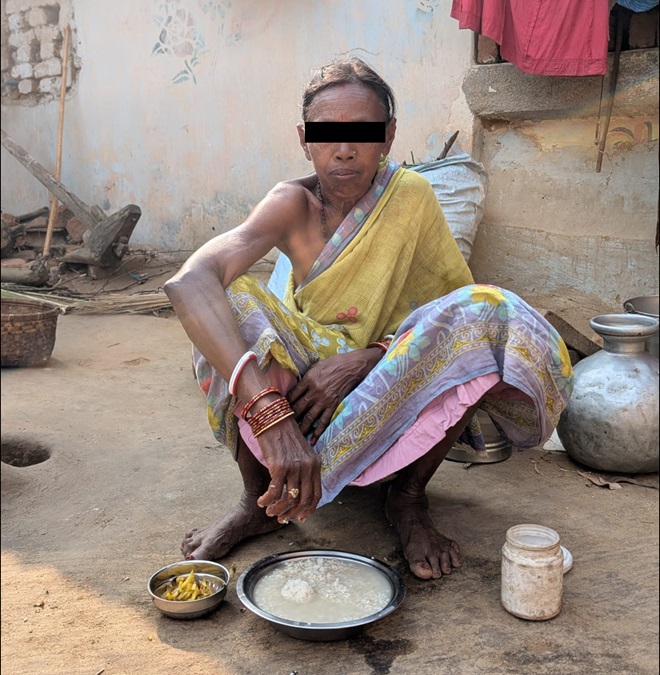
However, once three rounds of seasonal dietary data were analysed, the results were far less dramatic. Despite the diversity documented in markets and kitchens, everyday diets were much less varied. Across households, the most frequently consumed ingredients were rice and potatoes. Meals often centred around rice accompanied by simple potato preparations, while snacks frequently consisted of biscuits and packaged foods. This pattern appeared consistently for both women and children across seasons.
The recipes had not disappeared. The knowledge of how to prepare them remained intact. The ingredients were still available in markets. Yet daily consumption patterns had narrowed considerably.
What made this finding even more striking was that our data suggest households are not necessarily constrained by food budgets alone. Households are spending amounts that would, in principle, be sufficient to afford a healthy diet based on the recommendations of the National Institute of Nutrition (NIN), yet their diets remain far less diverse and nutritionally adequate. Yet the diets we observe remain far less adequate in terms of diversity and nutrient quality. This points to a deeper issue: not just how much households spend on food, but what foods are actually available, accessible, and convenient within their local food environments.
Evidence from National Data
These findings are consistent with broader national trends. The Household Consumption Expenditure Survey (HCES) 2023–24, conducted by the Ministry of Statistics and Programme Implementation across more than 2.6 lakh households, shows a steady increase in spending on processed foods.
Between 2011–12 and 2023–24, the share of household spending on beverages and processed foods, including packaged snacks, biscuits, noodles, and sweetened drinks, increased from 7.90% to 9.84% in rural areas, and from 8.98% to 11.09% in urban areas. During the same period, the share of expenditure on vegetables declined slightly, from 6.62% to 6.03% in rural households and from 4.63% to 4.12% in urban households. Spending on milk and milk products remained largely unchanged.
Other indicators point in the same direction. Data from the 2022–23 National Sample Survey Office (NSSO) Consumer Expenditure Survey show that biscuits and chocolates remain the most widely consumed packaged processed foods, with their share among consuming households rising from 69.5% in 2011–12 to 86.8%. Consumption of snack items such as chips increased sharply, from 7.4% to 44.2%. Instant noodles were consumed by 21% of households. At a broader level, the market for ultra-processed foods in India has expanded rapidly, growing from approximately USD 900 million in 2006 to USD 37.9 billion in 2019.
Why Does This Happen?
The reasons behind these dietary patterns are complex.
Is it lack of time? Cooking a proper meal with fresh vegetables takes effort, soaking, cutting, tempering, simmering. Ripping open a biscuit packet takes three seconds and feeds a crying child.
Is it ease and palatability? Sugary, salty, fatty foods are engineered to be irresistible, and they work. A child who has tasted a cream biscuit will not easily choose a bitter gourd.
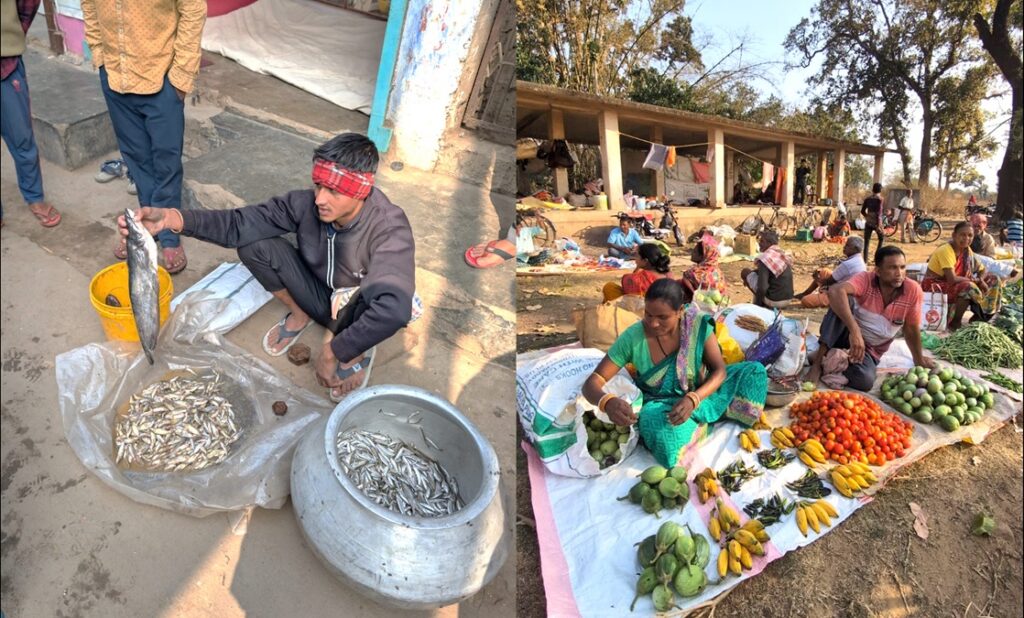
Is it market infrastructure? In most of rural Bihar and Odisha, the haat, the weekly market, comes once every seven days. Fresh vegetables and fruits are perishable. You cannot buy them on Sunday and expect them to last until Saturday. You cannot store them without refrigeration. You cannot afford to waste them when every rupee is accounted for.
But packaged chips? Glucose biscuits? Tang and bottled beverages? They sit in every kirana shop, in every lane, in every village, 365 days a year, rain or shine, without a cold chain, without expiry anxiety, at a price point designed to be accessible.
In fact, in many villages the one place where reliable cold storage exists is not for vegetables, milk, or fish but for soft drinks. Branded refrigerators supplied by beverage companies are a common sight in small rural shops, ensuring that products like Coca-Cola are always chilled and ready to sell, even though these beverages do not technically require refrigeration to remain safe for consumption. The infrastructure exists, it is simply organised around the distribution of processed beverages rather than nutrient-dense foods.
The market has solved the problem of availability, but it has solved it for the wrong foods.
Rethinking the Food Environment
First: perishable, nutrient-dense foods need to be as accessible as biscuits. Not just once a week at a haat that you may or may not be able to reach. We need cold chain infrastructure, we need aggregation models that bring fresh produce into villages regularly, we need market interventions that reduce the price premium of nutritious foods relative to processed alternatives.
Second: the processed food industry has built a distribution marvel in rural India. Every lane, every village, every season. If we are serious about nutrition, we need to ask, can the same energy, capital, and ingenuity be redirected toward making a banana or a bunch of spinach as reliably available as a packet of Parle-G?
Third: we need to rethink the snack environment in rural markets. Today, high fat, sugar and salt snacks dominate the small purchases that people make every day. What if fruit chaats, fresh fruit vendors, and juice sellers were just as visible and accessible as chips and biscuits? Behaviour change communication must start early, in schools, shaping children’s preferences so that a ₹5 banana feels just as desirable as a ₹5 packet of chips.
Fourth: we need to stop calling potato a vegetable. Potato is energy and starch and not the leafy green, the legume, the fruit, or the animal-source food that a growing child’s body desperately needs.
India’s culinary traditions remain rich and diverse. The hundreds of recipes we documented across Bihar and Odisha continue to exist in knowledge and culture.
The challenge is ensuring that this diversity is reflected not only in tradition, but also in everyday diets. Our job in the INFUSION project is painstaking, humbling, and occasionally conducted with a weighing scale in a Tuesday haat, is to build the evidence that brings them back to the table.